←

Numan
Not a pharmacy. A clinic that stays.
Role
Senior Product Designer
Studio/Client
Numan
Sector
Healthtech Consumer
Link
Product
Brand Integration
Product Strategy
Numan is one of the UK's leading digital healthcare platforms — preventative health, diagnostics and personalised treatment, scaling rapidly across weight management for women and men's health. $100M+ funding, $90M+ ARR.
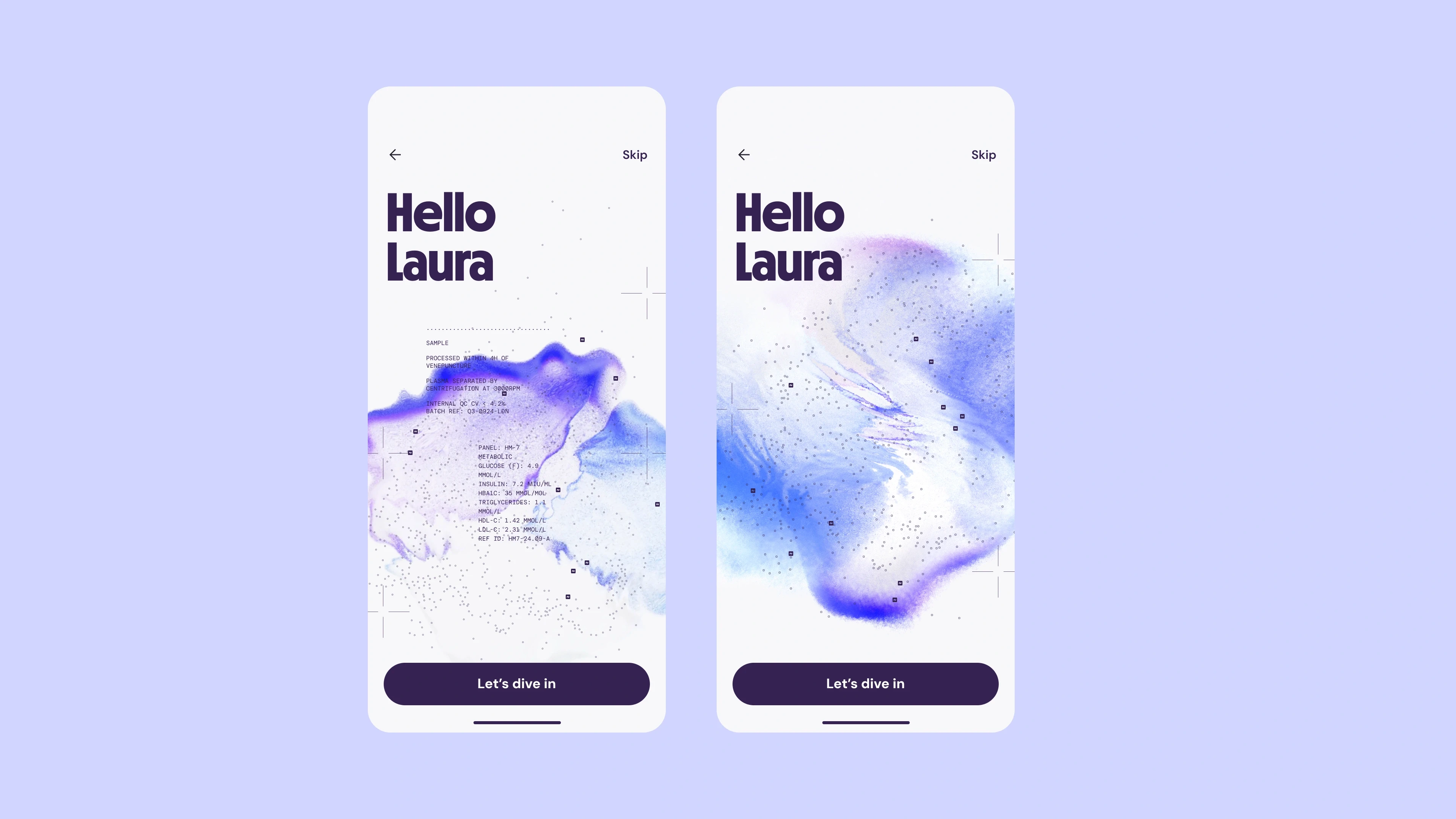
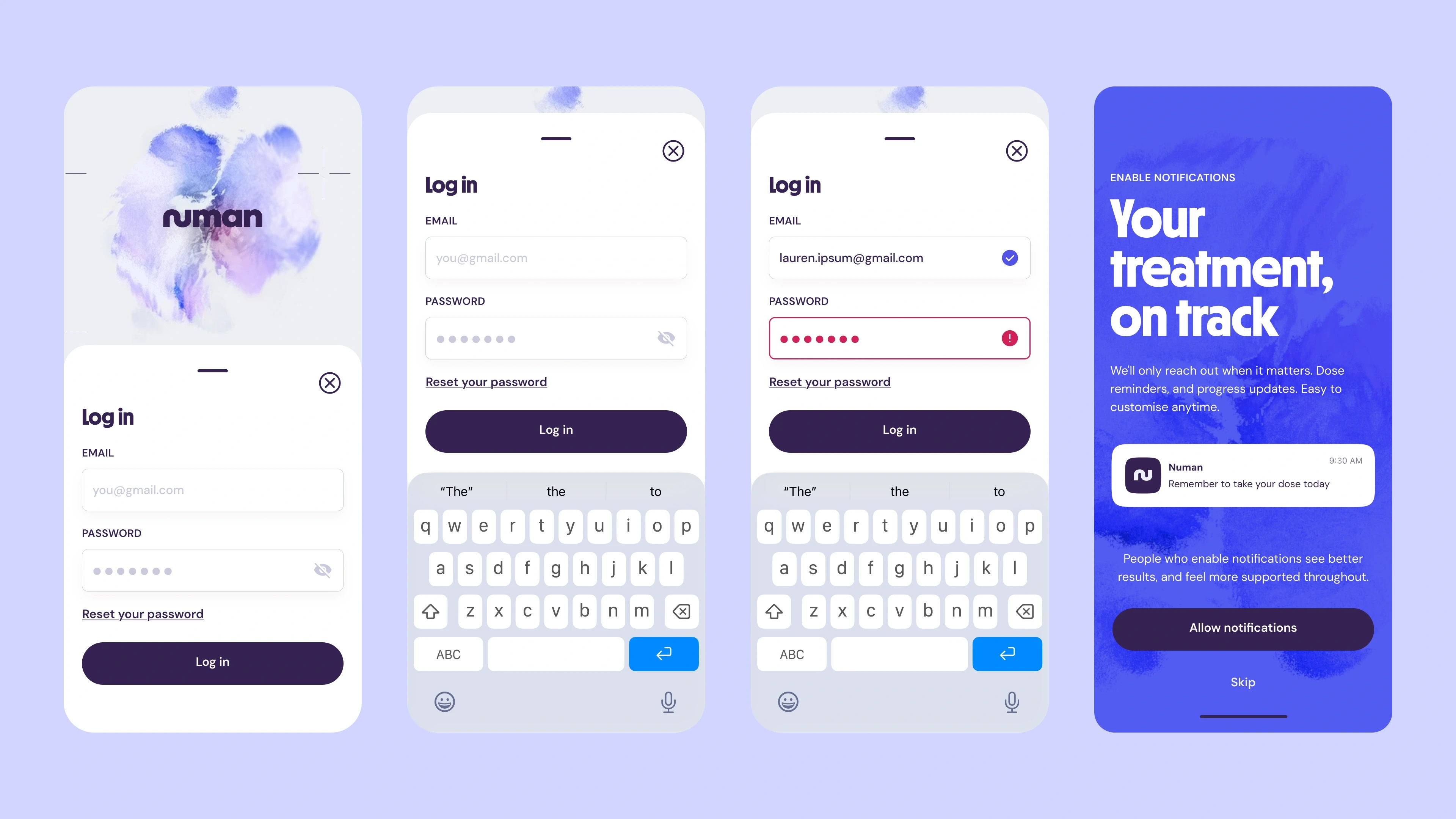
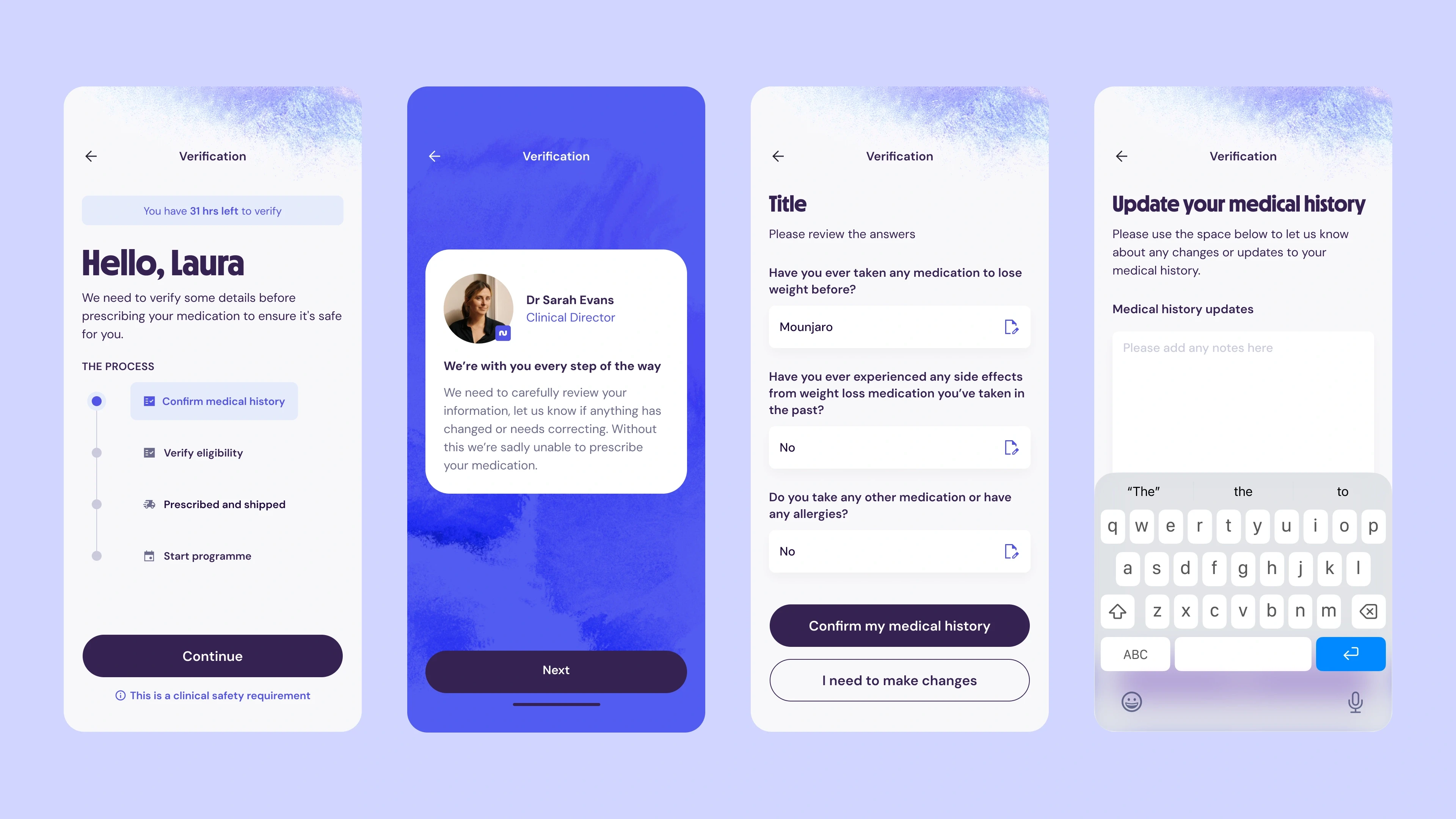
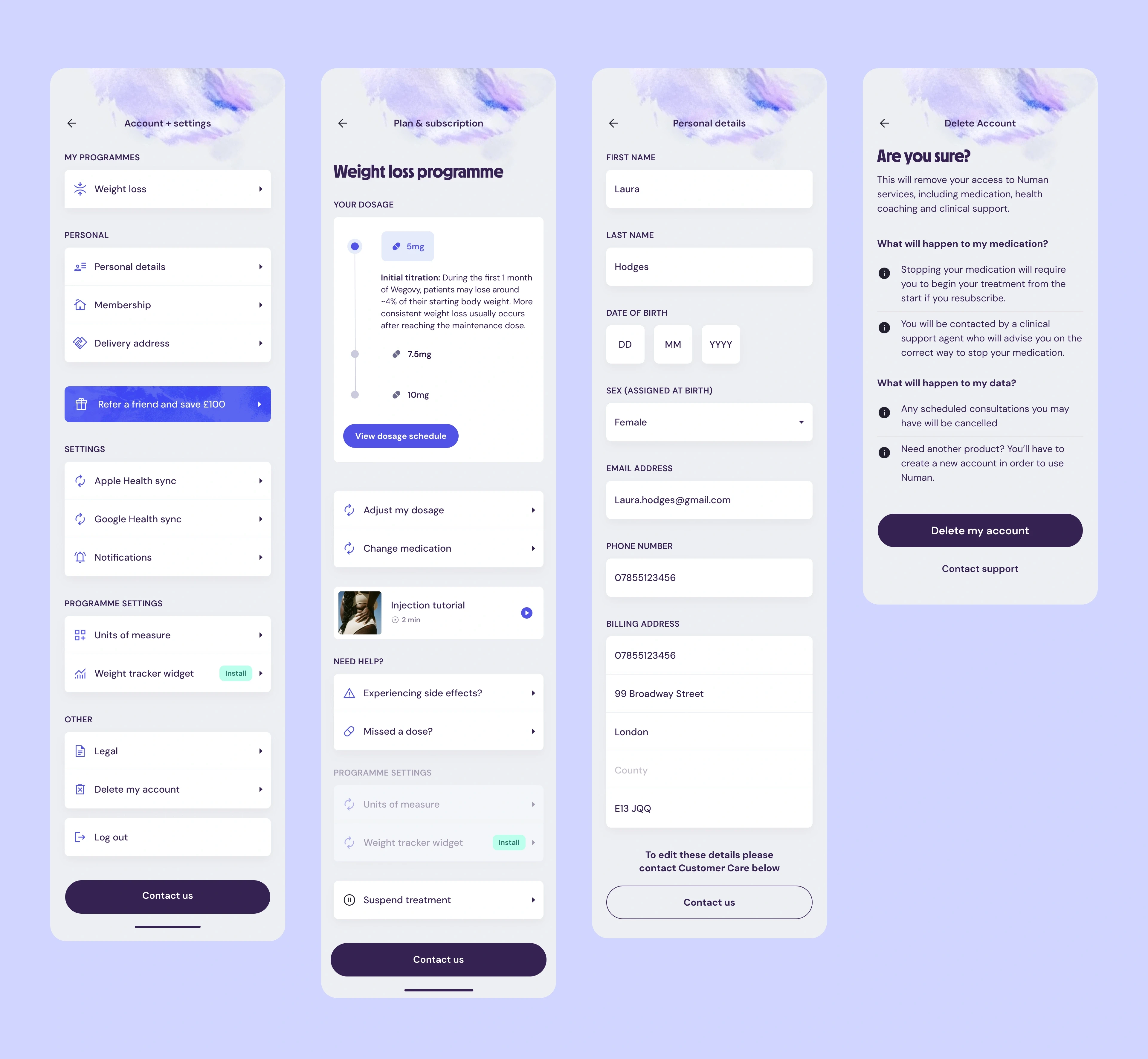
I was brought in to join a small tactical team, set the future product vision and roll it out into the design squads. The brief spanned web, iOS and internal tools aligning an evolving rebrand, UX and AI-assisted product thinking into a single coherent experience model.
Overview
Numan is a UK digital health company with $113M in funding and 650k patients — built on the idea that men's health deserves better than a GP waiting room. Strong early traction as a treatment service, but the next phase of the business needed something more ambitious: a genuinely personalised health platform that could scale.
Challenge
Numan had strong commercial traction but a fragmented product picture. The next phase meant evolving from a treatment service into a genuinely personalised health system — one that balances intelligent automation with human trust, ethical care and science-backed evidence. The harder problem sat underneath the product: the org was operating from a developer-first mindset, and the work needed to reframe conversations around the whole patient experience, not feature delivery.
Approach
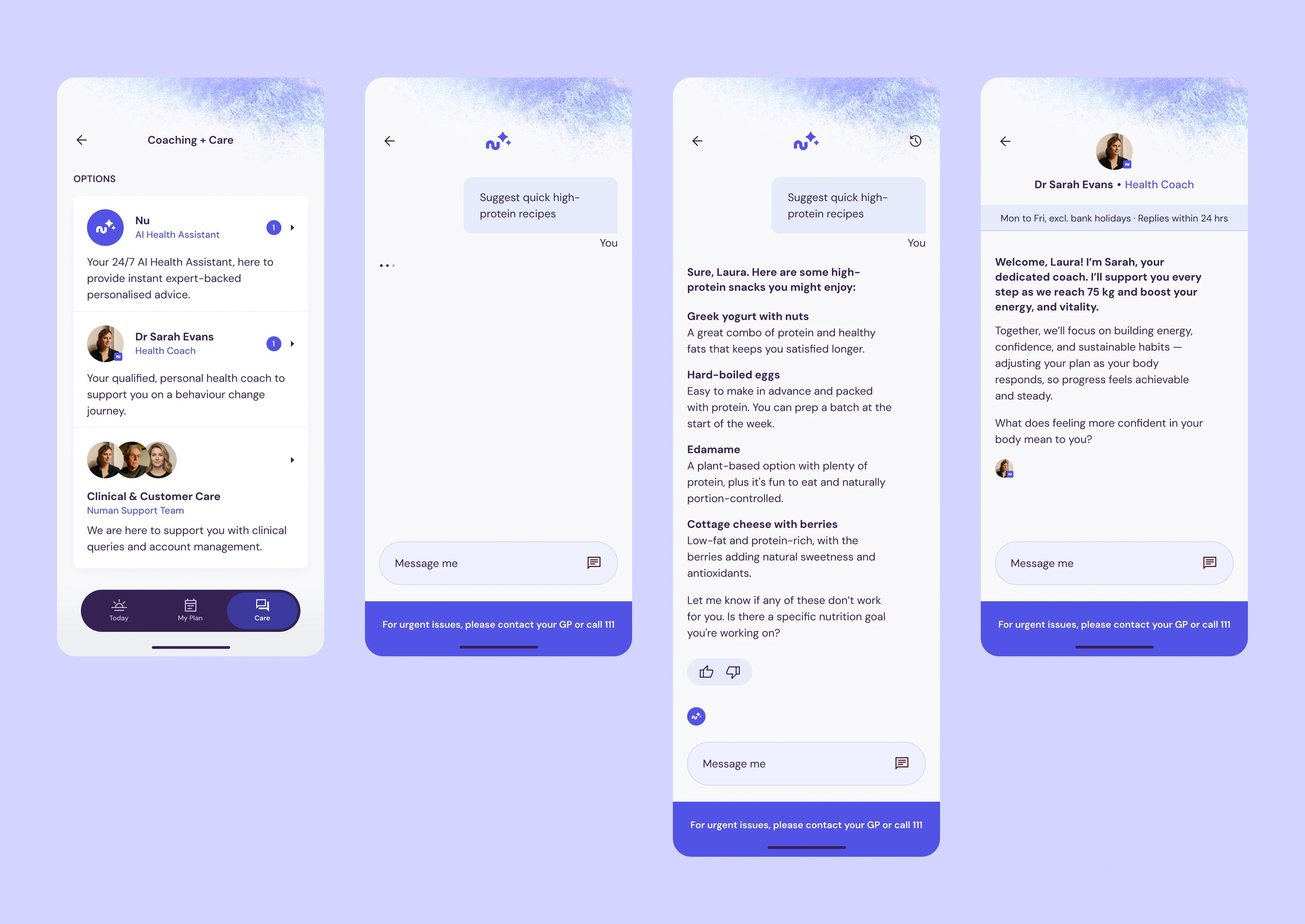
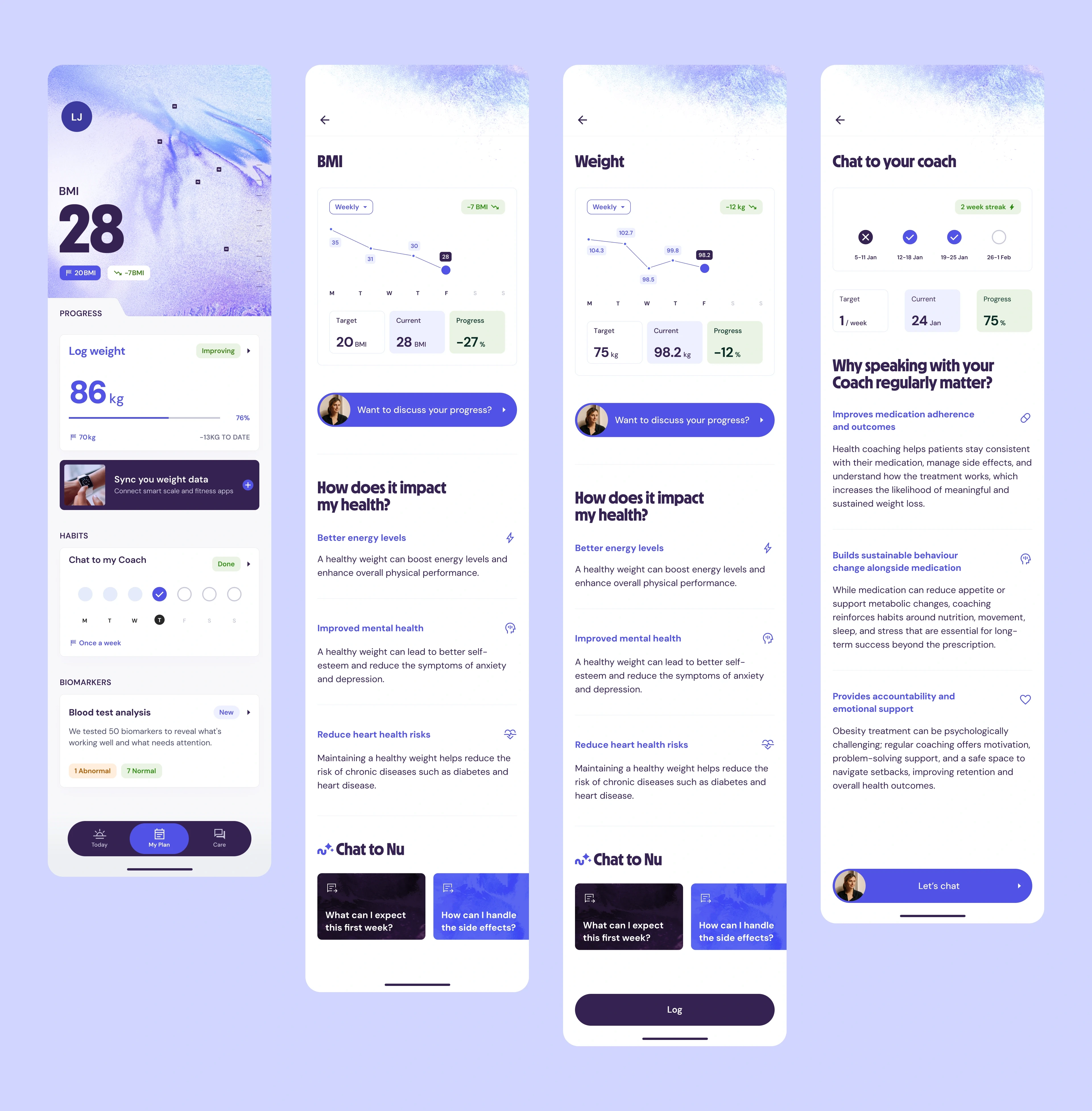
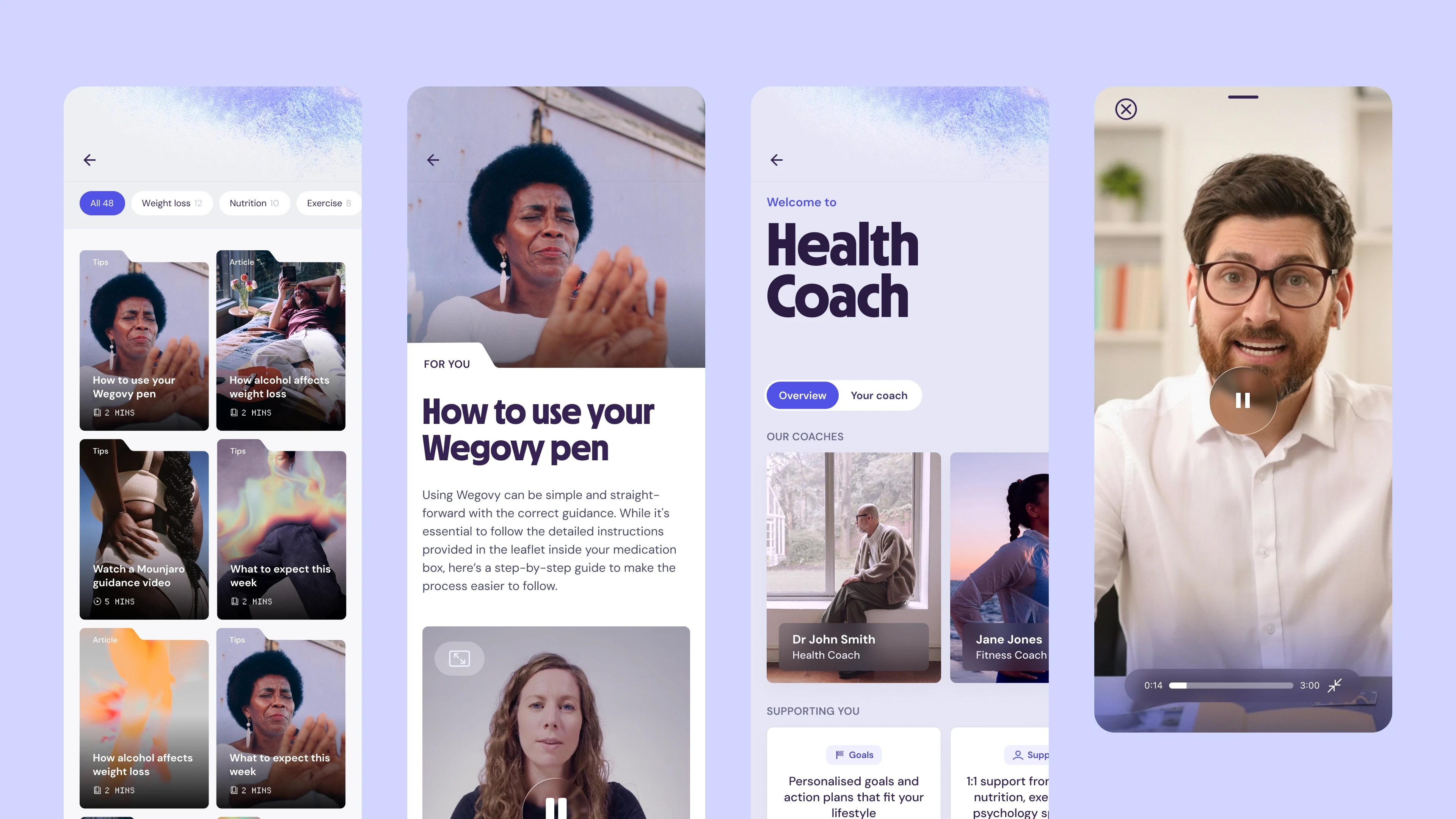
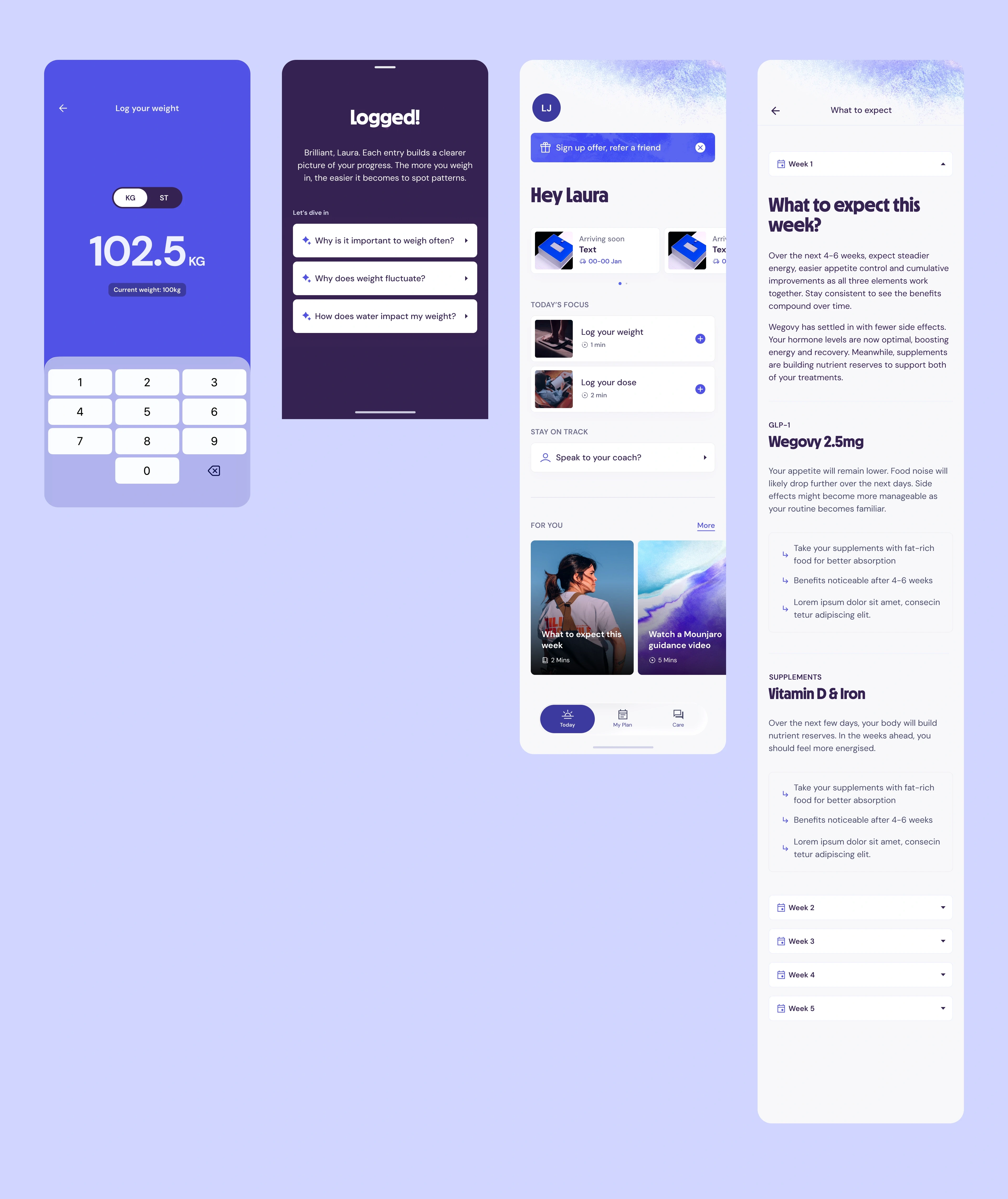
We defined a future-facing vision for preventative healthcare and architected Numan 2.0, a closed-loop health system built from six interconnected components: Metrics, Health Score, Goals, Programme, Action and Coaching. The model turns everything known about a patient into a clear view of their health, sets goals that matter to them, builds a followable plan, and breaks it into simple daily actions with conversational, agentic AI coaching keeping them confident, safe and on track. Across iOS, Android and web, the work moved from strategic product direction through to experience architecture, designed so behaviour creates measurable improvement: metrics rise, the Health Score climbs, and the patient's sense of control grows. Alongside the product itself, much of the engagement was capability-building — embedding design thinking across the org and shifting the team toward a holistic view of customer value.
Outcome
The work established a scalable foundation for a more personalised, proactive and intelligently guided platform and a product vision the design squads could build from. The stronger story isn't the artefacts shipped, but the combination of AI-first strategic thinking, capability transfer and hands-on delivery.
Link




Team
Tom Newton Tom Myers Matt Wheeler Chris Moore Toby Montague Andriana Nassou Daniela Cadore Sam Dodd-Noble