←

Nike
Trash transformed, website included
Role
Creative Director + Designer
Studio/Client
Rehab
Sector
Retail Sustainability
Product
Creative Direction
Web
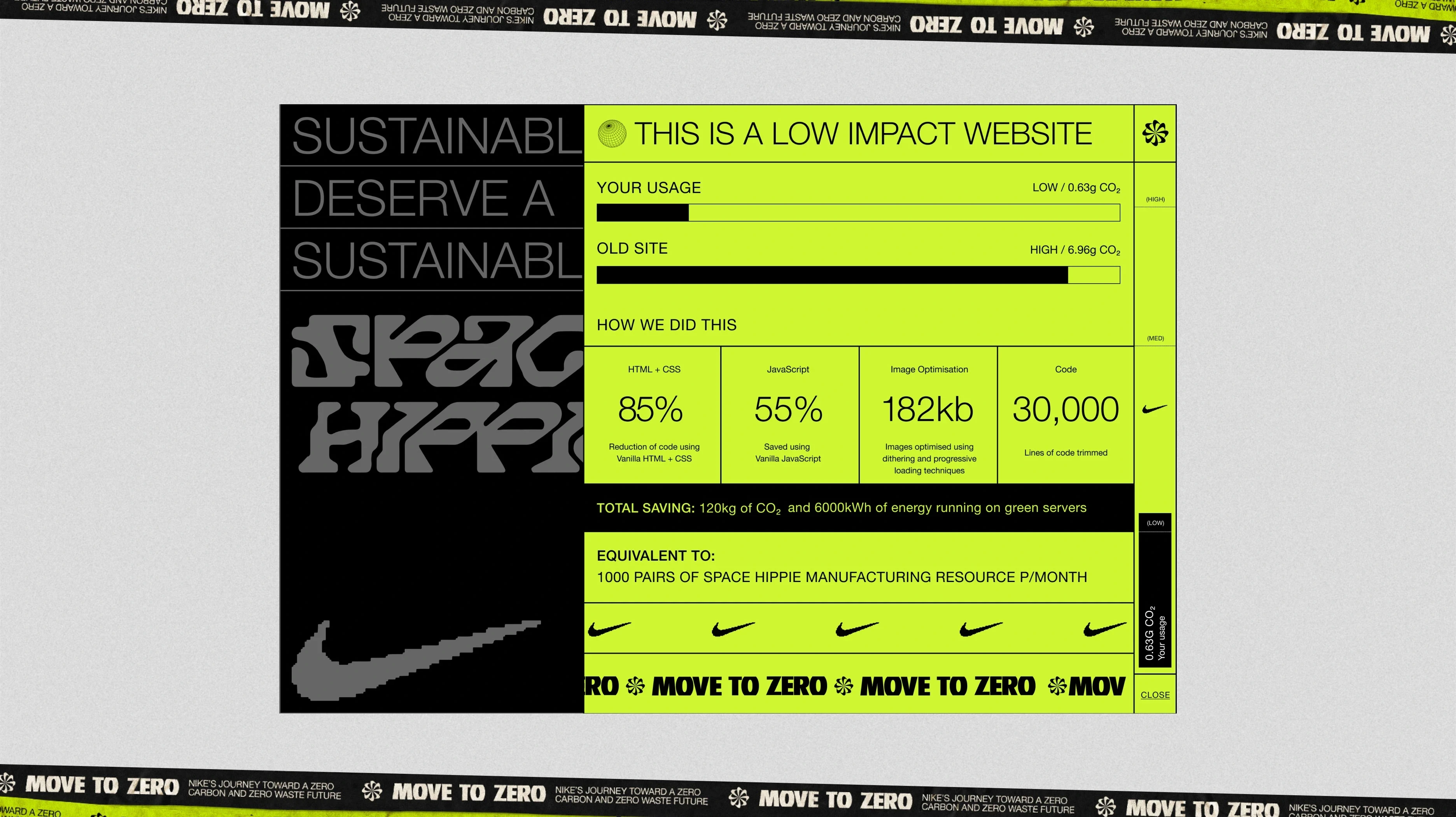
A concept sprint asking whether a major brand's digital presence could be as sustainable as its product. Working at Rehab for Nike's Space Hippie launch, we stripped a website back to its bare essentials — featherweight code, dithered images, progressive loading, hosted on a Raspberry Pi — and built something with a 98.72% smaller carbon footprint than nike.com. Proof that sustainable design is a real craft problem, not a footnote.


Overview
Nike's Space Hippie line — built from 25–50% recycled content — is one of the more honest attempts by a major sportswear brand to make sustainability tangible rather than just marketed. Working at Rehab, I led the creative and design of a concept experience to complement the next-generation launch: one that would reflect Nike's Move to Zero manifesto and start asking real questions about what a sustainable digital footprint could look like.
Challenge
Nike.com is heavy. Over a year at a million monthly visits, it produces roughly 7,700kg of CO₂ — enough energy to drive an electric car over 129,000km. If the shoe was trash transformed, could the website be too? The challenge was making that idea real: not just a greener site in principle, but a prototype that demonstrated the carbon impact of every design decision, without sacrificing visual quality.
Approach
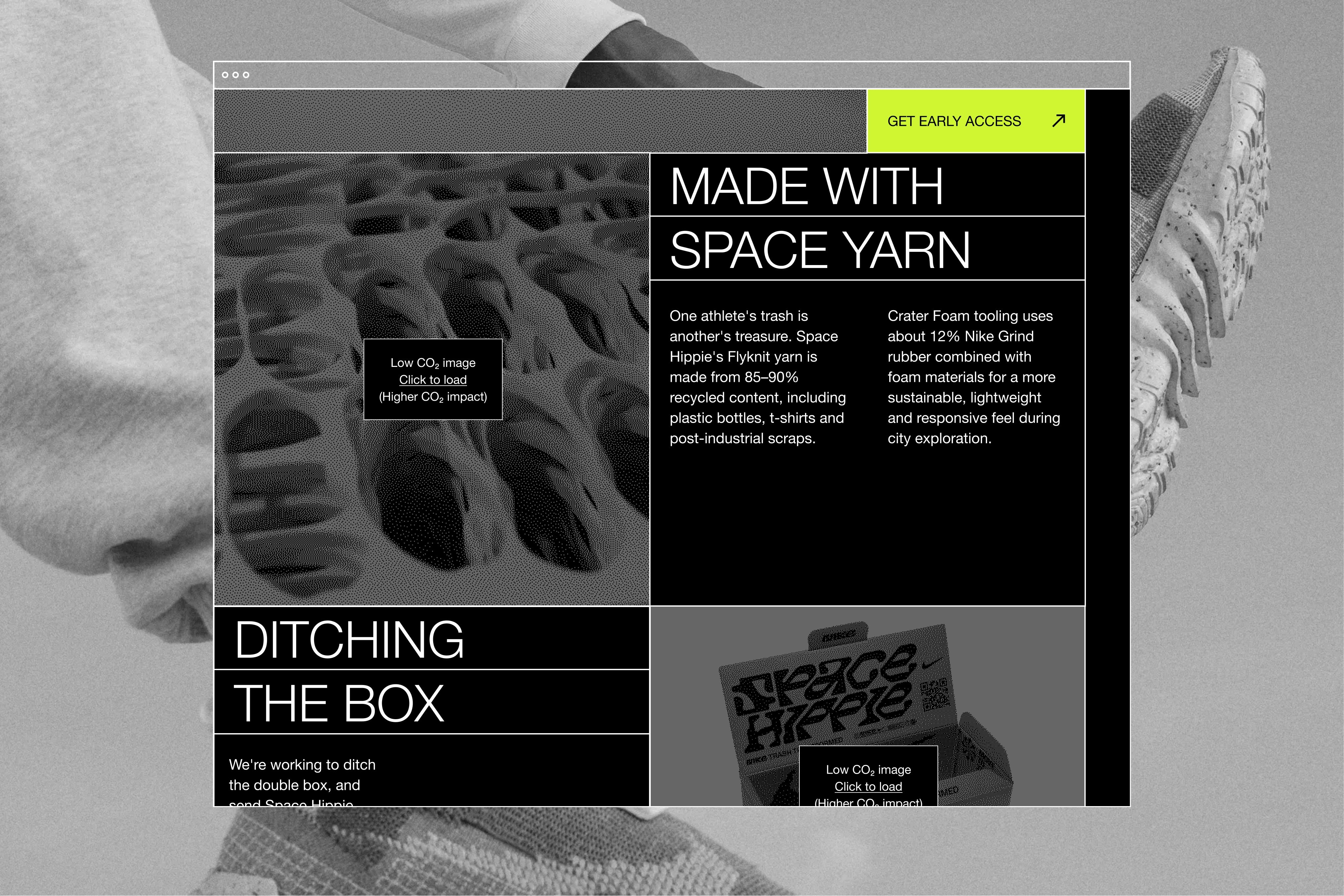
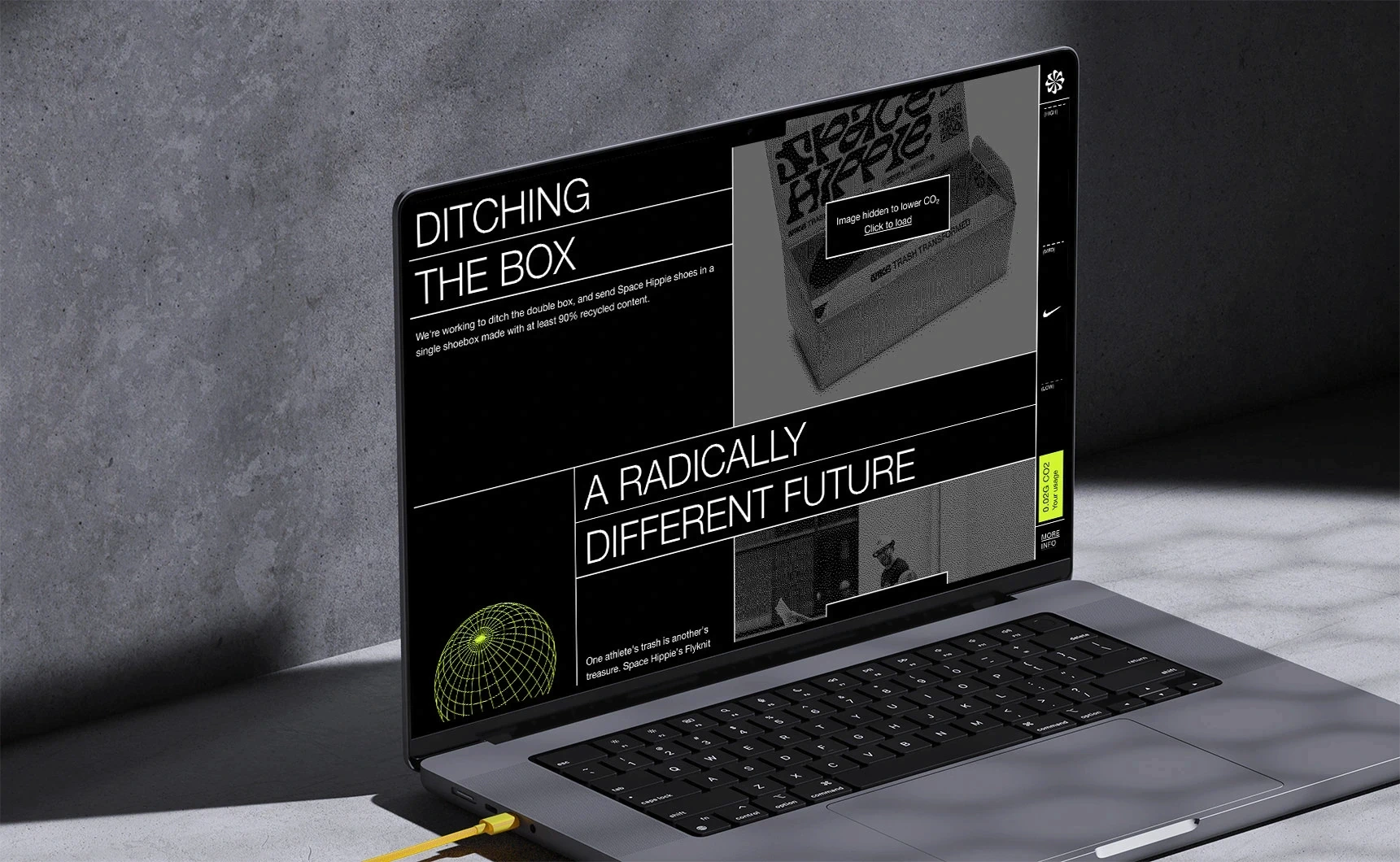
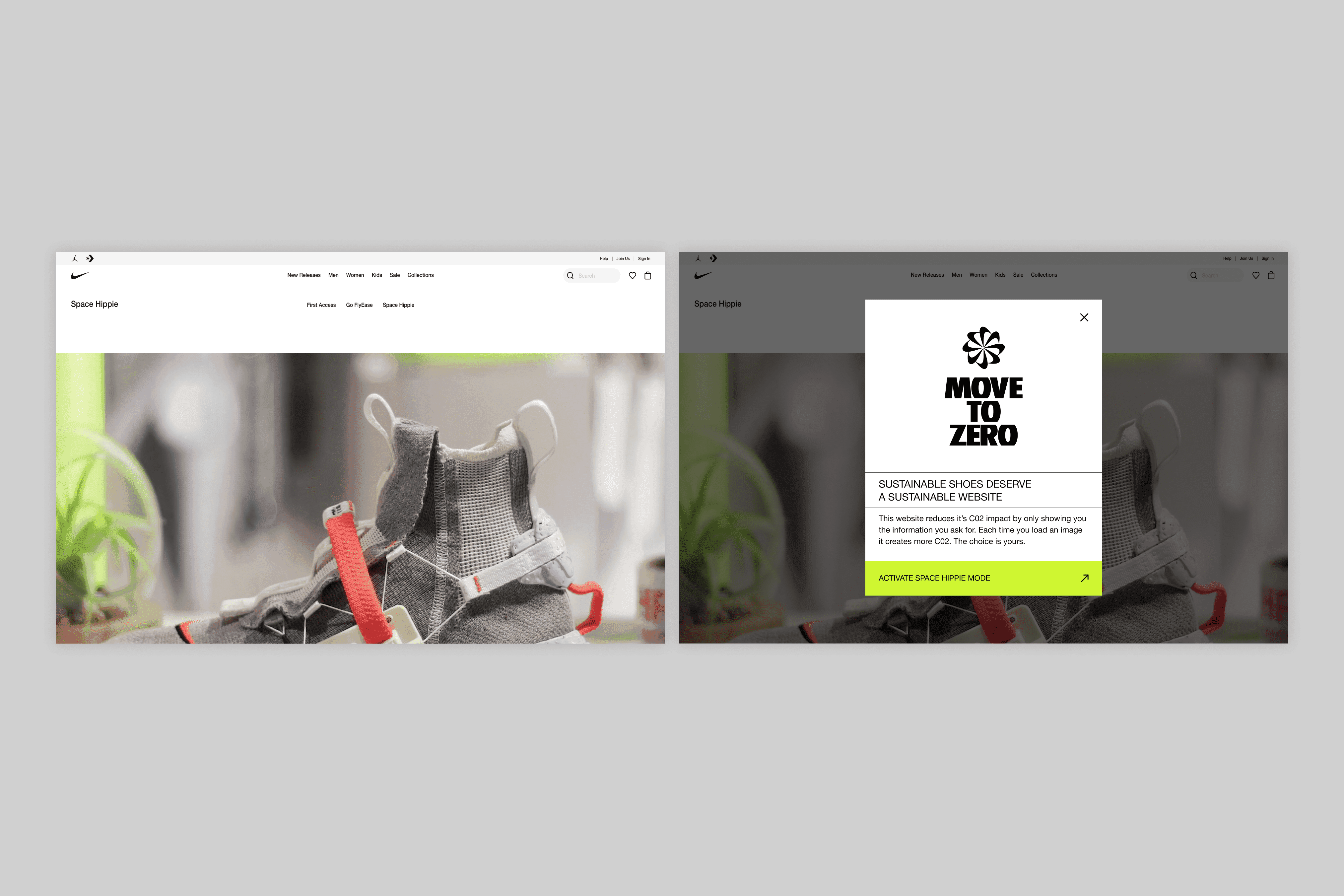
We started from first principles — stripping the experience back to a featherweight vanilla HTML/CSS/JS build, hosted on a Raspberry Pi, with no video, dithered images, progressive loading, click-to-load content, and a single system font. Early concepts explored green-screen terminals and ASCII aesthetics before evolving to align with Nike's Circular Design Language. We built an informative data panel into the experience itself, making the environmental impact visible to the user in real time.
Outcome
Three concepts developed, two built, one deployed on a Raspberry Pi. The final build achieved a 98.72% smaller carbon footprint than the standard nike.com page — proof that sustainable design at this scale is a real design problem, not just a brand gesture. Delivered in just four weeks.






Team
Nick Voke Marie Vodickova Robin Hunter